You’ve probably read dozens of articles promising “b2b SaaS growth hacks” that turned out to be either obvious advice or completely impractical for your B2B SaaS. When you’re trying to hit aggressive growth targets with a limited budget, you need tactics that actually move the needle.
After analyzing what’s working for successful B2B SaaS companies in 2025, we have compiled growth strategies that are battle-tested, data-backed, and most importantly, actionable. These aren’t theoretical frameworks, they’re tactics you can implement this week.
This guide covers growth strategies that successful B2B SaaS companies are using right now to drive measurable results. We’ll explore techniques that address the entire customer lifecycle, from attracting the right leads to turning them into loyal advocates. Get ready to supercharge your growth!
Table of Contents
The Foundation of Growth: Understanding Your Customer
Before we even talk about “hacks,” let’s be clear: genuine growth stems from a profound understanding of your ideal customer. Growth hacking isn’t a shortcut around this; it’s about finding efficient ways to deliver value to that customer.
- Define Your Ideal Customer Profile (ICP): Who benefits most from your solution? What are their pain points, goals, and existing tech stack? Go beyond demographics, think psychographics and behavioral patterns.
- Create Detailed Buyer Personas: Give your ICPs a name, a job title, a story. What challenges do they face daily? What keeps them up at night? This empathy is crucial for crafting messaging and product features that resonate.
- Map the Customer Journey: From initial awareness to becoming a loyal customer, understand every touchpoint. Where do they look for solutions? What information do they need at each stage?
Without this foundational knowledge, any growth hack will be a shot in the dark.
7 B2B SaaS Growth Hacks
Growth Hack #1: Leverage Content Marketing for Inbound Lead Generation
Content isn’t just king; it’s the entire kingdom for B2B SaaS. High-quality, problem-solving content attracts your ICP organically, positions you as a thought leader, and nurtures leads down the funnel.
Actionable Content Marketing Strategies:
- Solve Specific Pain Points: Don’t just write about your product. Write about the problems your product solves. For example, instead of “Our CRM Features,” try “How to Streamline Your Sales Pipeline and Close More Deals.”
- Focus on Long-Tail Keywords: These specific, often longer phrases have less competition and attract highly qualified traffic. Tools like Ahrefs or SEMrush can help identify them.
- Create Pillar Content and Content Clusters: Develop comprehensive “pillar pages” (e.g., “The Ultimate Guide to B2B SaaS Marketing”) and then link to supporting, more specific blog posts (clusters). This establishes topical authority with search engines.
- Repurpose Content: Don’t let good content sit idle, repurpose it. Turn blog posts into infographics, webinars, podcast episodes, email courses, or even LinkedIn carousels.
- Guest Blogging (Strategic Outreach): Write for authoritative industry blogs where your ICP hangs out. This builds backlinks, drives referral traffic, and enhances your domain authority.
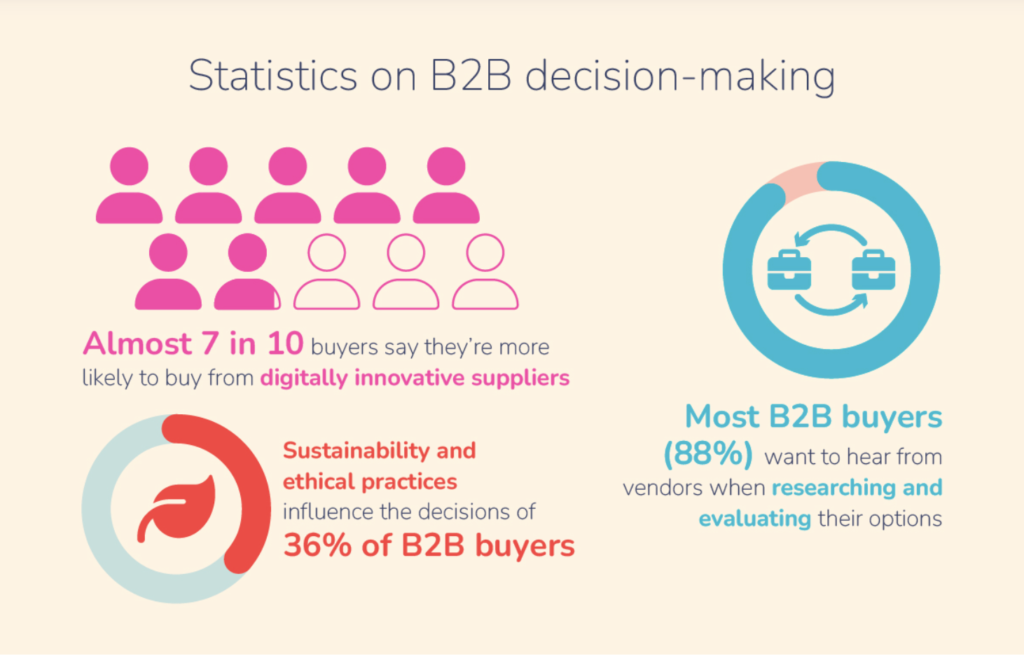
Why it works: According to a recent reports, 47% of buyers view 3-5 pieces of content before engaging with a sales rep. High-quality content educates, builds trust, and pre-qualifies leads, leading to shorter sales cycles.
Growth Hack #2: Implement Product-Led Growth (PLG) Strategies
Product-led growth is a go-to-market strategy where the product itself drives customer acquisition, conversion, and expansion. Think of companies like Slack, Zoom, and Calendly – users can often try before they buy, experiencing immediate value.
Actionable Product Led Strategies:
- Offer a Freemium Model: Provide a valuable, albeit limited, version of your product for free. The goal is to hook users on the core functionality and then upsell them to paid features.
- Key: The free tier must provide genuine value and make users “sticky.”
- Example: Loom allows free users to record short videos, demonstrating the core value.
- Provide a Free Trial (No Credit Card Required): Lower the barrier to entry by letting users experience your full product without commitment. Focus on quick “time to value” during the trial period.
- Optimize Onboarding: Guide users to experience a “aha!” moment as quickly as possible. What’s the one feature that makes them say, “Wow, I need this”?
- In-App Guided Tours and Tooltips: Don’t just throw users into the deep end. Use subtle prompts and tours to highlight key features and guide them towards successful actions.
- Leverage User Data for Personalization: Track user behavior within your product to identify areas of friction, popular features, and opportunities for upsells. Use this data to personalize in-app messages and onboarding flows.
Why it works: PLG reduces customer acquisition costs (CAC) by allowing users to “self-serve” their way through the sales funnel. It also leads to higher retention rates because users have already experienced and understood the product’s value.
Growth Hack #3: Harness the Power of Strategic Partnerships
Collaborating with other businesses can be a goldmine for B2B SaaS growth, exposing you to new audiences and building credibility.
Actionable Strategic Partnership Strategies:
- Integrate with Complementary Software: Partner with companies whose products integrate seamlessly with yours, offering a more complete solution to a shared customer base. Promote these integrations together.
- Example: A project management tool integrating with a time tracking app.
- Co-Marketing Initiatives: Team up on webinars, e-books, research reports, or joint content series. This allows you to tap into each other’s audiences and generate qualified leads.
- Reseller or Referral Programs: Incentivize other businesses (e.g., consultants, agencies) to recommend or resell your product. This can provide a powerful, low-cost sales channel.
- Affiliate Programs: While more common in B2C, well-structured affiliate programs can work for B2B, particularly for products with a broader appeal.
Why it works: Partnerships offer a synergistic effect, multiplying your reach and perceived value. It’s a win-win: both parties gain exposure and potential new customers.
Growth Hack #4: Master Email Marketing Automation
Email isn’t dead; it’s one of the most effective channels for B2B SaaS. Automated email sequences can nurture leads, onboard new users, drive feature adoption, and even re-engage dormant customers.
Actionable Strategies:
- Welcome Sequences for New Sign-ups: Immediately engage new leads or trial users with a series of emails that introduce your product, highlight key benefits, and guide them to their “aha!” moment.
- Lead Nurturing Campaigns: Segment your leads based on their behavior (e.g., content downloads, website visits, demo requests) and send targeted emails that address their specific needs and move them closer to conversion.
- Personalization is Key: Use their name, company, and reference their recent actions.
- Onboarding Drip Campaigns: For new paying customers, provide valuable tips, tutorials, and success stories to ensure they fully adopt and derive maximum value from your product.
- Re-engagement Campaigns: Win back inactive trial users or dormant customers with special offers, new feature announcements, or personalized outreach.
- Feedback & Review Requests: Automate requests for customer feedback and reviews at opportune moments (e.g., after a certain usage milestone).
Why it works: Email marketing offers an incredible ROI. According to Campaign Monitor, for every $1 spent, email marketing generates $42 in ROI. It allows for highly personalized communication at scale.
Growth Hack #5: Leverage Community Building & Social Proof
In the B2B world, trust and credibility are paramount. Social proof and a strong community can significantly influence purchasing decisions.
Actionable Community Building Strategies:
- Showcase Customer Success Stories & Case Studies: Highlight how your existing customers have achieved tangible results using your product. Be specific with numbers and outcomes.
- Collect and Display Testimonials: Feature positive quotes and reviews prominently on your website, landing pages, and marketing materials. Video testimonials are even more powerful.
- Actively Solicit Reviews on Third-Party Platforms: Encourage satisfied customers to leave reviews on sites like G2, Capterra, and TrustRadius. These platforms are crucial for B2B buyers.
- Build a Customer Community: Create a forum, Slack group, or LinkedIn group where customers can connect, share best practices, and get support. This fosters loyalty and reduces churn.
- Example: Salesforce Trailblazer Community.
- Run Referral Programs: Incentivize existing happy customers to refer new ones. Word-of-mouth is still one of the most powerful growth drivers.
Why it works: B2B buyers are risk-averse. Seeing that their peers trust and benefit from your product significantly reduces perceived risk and accelerates the sales cycle.
Growth Hack #6: Optimize Your Website & Landing Pages for Conversions
All your SaaS SEO efforts to drive traffic will be wasted if your website isn’t optimized to convert visitors into leads or customers. This is where Conversion Rate Optimization (CRO) comes in.
Actionable CRO Strategies:
- Clear Value Proposition: Within seconds of landing on your page, visitors should understand what you do and how it benefits them.
- Strong Calls-to-Action (CTAs): Make your CTAs prominent, actionable, and benefit-oriented (e.g., “Start Your Free Trial,” “Get a Demo,” “Download the Guide”).
- Simplify Forms: Request only essential information in your forms. Shorter forms generally lead to higher completion rates. Consider multi-step forms for longer processes.
- A/B Test Everything: Continuously test different headlines, hero images, CTA button colors/copy, form lengths, and page layouts to see what resonates best with your audience.
- Tools: Google Optimize, VWO, Optimizely.
- Ensure Mobile Responsiveness: A significant portion of your traffic will come from mobile devices. Your website must provide a seamless experience on all screen sizes.
- Utilize Exit-Intent Pop-ups: Capture abandoning visitors with a final offer, such as a lead magnet or a special discount for signing up.
Why it works: Even small improvements in your conversion rate can have a massive impact on your lead generation and revenue without increasing your traffic spend.
The “Alternative” Strategy: Intercepting Competitor Traffic
One of the most effective ways to boost conversions is to target users who are already at the bottom of the funnel (BOFU). These are prospects searching for keywords like “[Your Competitor] vs [Alternative]” or “[Your Competitor] alternatives.”
These searchers have “commercial intent” that is off the charts—they have identified a problem, found a solution (your competitor), and are now looking for the best version of that solution. According to G2 data, 92% of B2B buyers read reviews before purchasing, and comparison pages are often their final stop before a decision.
How to Execute This Properly: The key is to create comprehensive pages for your top 5–10 competitors. However, to win the trust of a skeptical buyer, you must be genuinely fair and balanced. Baseless bashing destroys credibility instantly.
The Winning Page Structure:
- Honest Overview: A neutral summary of both solutions.
- Feature Comparison Table: A side-by-side breakdown of capabilities.
- Pricing Transparency: Use real numbers instead of “contact us” evasiveness.
- Ideal Use Cases: Clearly define where you win and where the competitor might actually be better.
- “Why They Switched” Testimonials: Real social proof from former users of that competitor.
- The Migration CTA: A non-pushy offer to help with data migration or a free onboarding session.
Real-World Success: ClickUp famously used this strategy to disrupt the project management space. By creating detailed comparisons against giants like Asana, Monday.com, and Trello, they captured high-intent traffic that converted at 3–5x higher rates than their general product pages.
SEO Optimization for Comparison Pages:
- Target Specific Slugs: Use
/vs/[competitor-name]or/[competitor-name]-alternative. - Visual Proof: Include actual screenshots and feature walkthroughs.
- Quarterly Updates: Ensure pricing and features are current to maintain trust.
- Interactive Tools: Add a “cost-savings calculator” or a “feature-match tool” to engage the user.
Growth Hack #7: Embrace Data-Driven Experimentation
Growth hacking isn’t a one-and-done solution; it’s a continuous cycle of hypothesis, experimentation, analysis, and iteration.
Actionable Strategies:
- Establish Clear KPIs: What metrics truly matter for your business? (e.g., CAC, LTV, churn rate, conversion rates, trial-to-paid conversions).
- Build a Growth Team/Culture: Foster a mindset of experimentation. Empower your team to propose and test new ideas.
- Use Analytics Tools Extensively: Implement Google Analytics, Mixpanel, Amplitude, or similar tools to track user behavior, identify bottlenecks, and measure the impact of your experiments.
- Heatmaps and Session Recordings: Tools like Hotjar can provide invaluable qualitative data on how users interact with your site.
- Document Your Experiments: Keep a log of all tests, hypotheses, results, and learnings. This prevents repeating mistakes and helps build a knowledge base.
- Fail Fast, Learn Faster: Not every experiment will succeed, and that’s okay. The key is to learn from failures quickly and apply those insights to your next iteration.
Why it works: A data-driven approach allows you to identify what truly moves the needle, allocate resources effectively, and adapt quickly to market changes, ensuring sustained growth.
Conclusion: The Growth Mindset
B2B SaaS growth isn’t about finding a magic bullet. It’s about combining a deep understanding of your customer with a relentless, data-driven approach to experimentation across all facets of your business. By systematically implementing these tested growth hacks, from leveraging compelling content and product-led strategies to building strong communities and optimizing conversions, you’ll create a powerful engine for sustainable hyper-growth.
Remember, the landscape is always evolving. Stay curious, stay agile, and keep experimenting. Your next breakthrough is just an optimized test away.